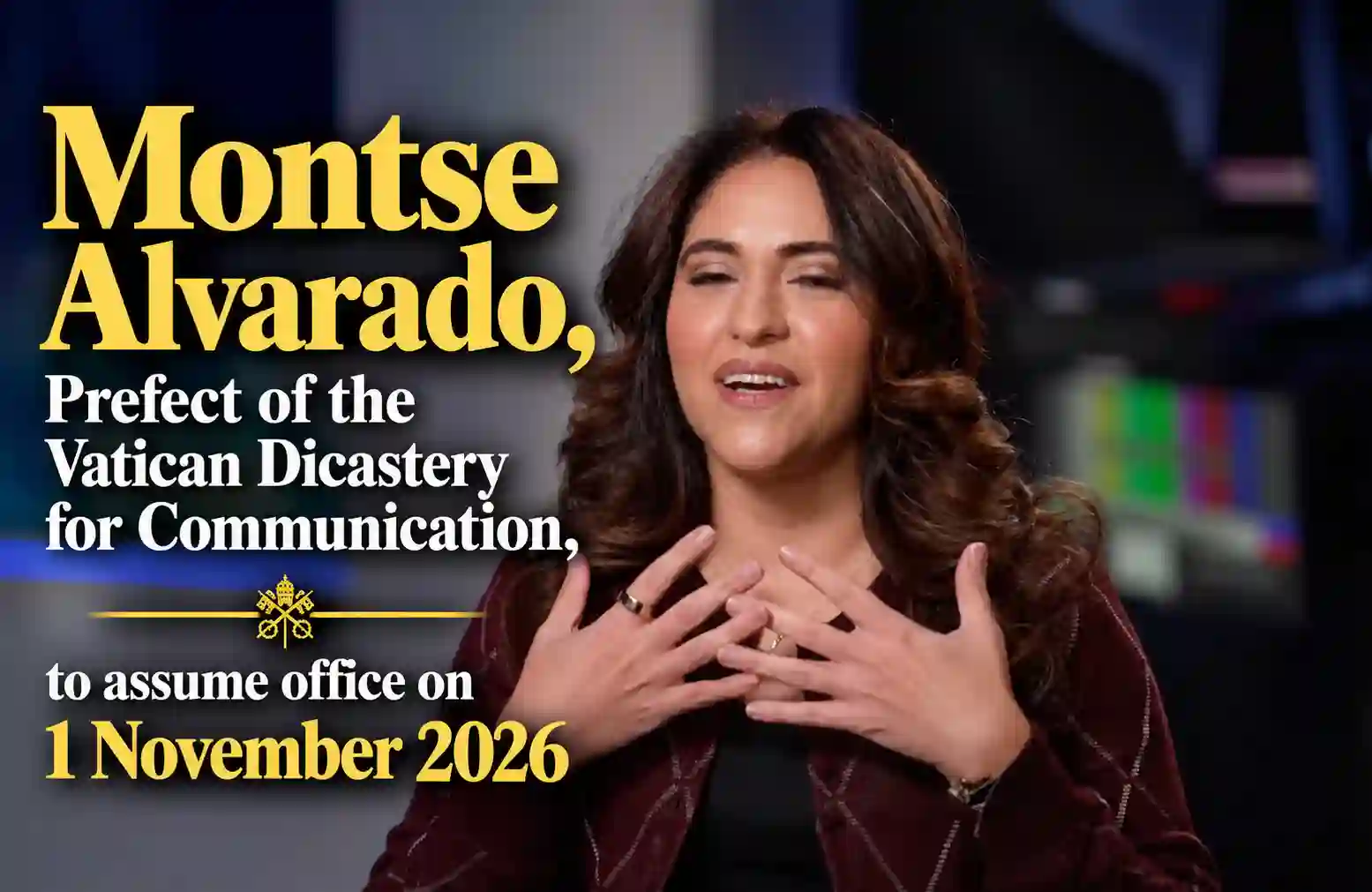
Guwahati, 25 October 2026 — At 39, Maria Montserrat “Montse” Alvarado is preparing to make history as the first laywoman appointed prefect of a dicastery of the Holy See. She will take charge of the Vatican’s Dicastery for Communication on 1 November 2026, bringing experience in religious-liberty advocacy, journalism and international media leadership to one of the Church’s key communication offices.
Pope Leo XIV appointed Alvarado on 2 June, succeeding Dr. Paolo Ruffini, who has led the dicastery since 2018. She is also among the youngest people to assume such a position in the Roman Curia.
From Mexico to Global Catholic Media
Born in Mexico City, Alvarado moved to the United States with her family when she was about seven or eight years old. She studied at Florida International University and later earned a master’s degree from George Washington University.
Before entering Catholic journalism, she built her career at the Becket Fund for Religious Liberty, joining the organisation in 2009. She held the senior leadership positions, including vice-president and executive director in Becket, working in communications, strategy, operations and advocacy.
Her work at Becket brought her into contact with prominent religious-freedom cases involving the rights of religious institutions and individuals. Among them was the legal challenge involving EWTN and the federal healthcare mandate, which raised questions about whether religious organisations could be required to provide employee health coverage for services contrary to their beliefs. The dispute became part of a wider debate over religious freedom in public life.
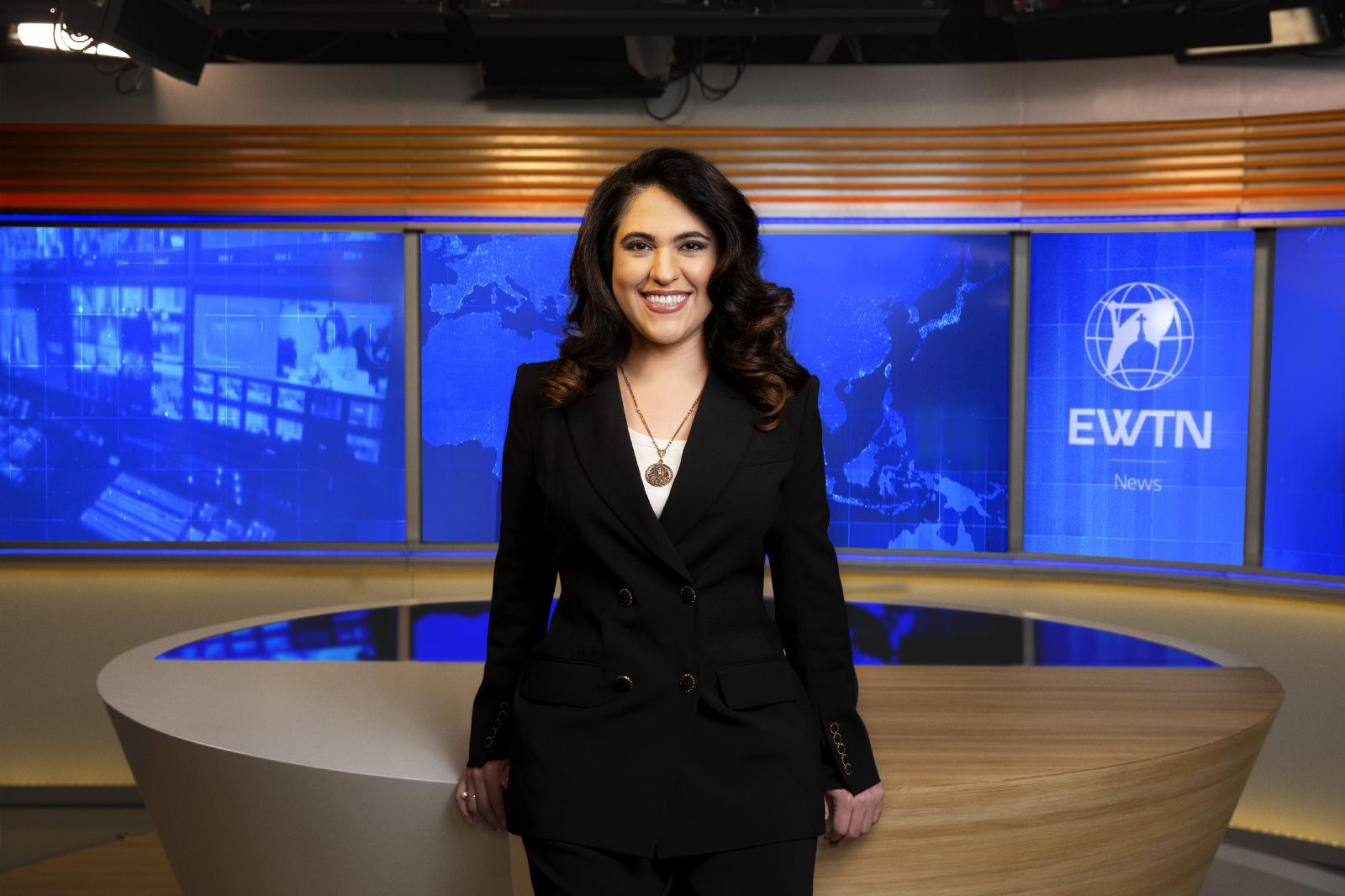
The experience helped prepare Alvarado to communicate complex legal and social questions to broad audiences and to navigate the relationship between religious conviction, public policy and the media.
From Television Presenter to Executive Leadership
Alvarado joined EWTN in 2021 as the founding host of EWTN News In Depth, a weekly programme examining developments in the Church, public affairs and culture. In March 2023, she became president and chief operating officer of EWTN News, overseeing international news operations across television, radio, print, digital platforms and social media.
In this role, she helped strengthen collaboration across the network’s platforms and language services, develop digital operations and align its international news brands.
ACI Prensa, a Spanish-language Catholic news agency founded in Peru in 1980 and part of EWTN since 2014, was rebranded as EWTN News Español on 12 October 2026. The move brought the agency more closely into EWTN’s global news network while retaining content tailored to Spanish-speaking audiences.
The development has particular resonance under Pope Leo XIV, born Robert Francis Prevost, who served as a missionary and later as bishop of Chiclayo in Peru.
Alvarado’s departure also marks a leadership transition at EWTN News. Ursula Murua has been appointed to succeed her as president, effective 1 November 2026.
A vocation she did not plan
Despite her professional achievements, Alvarado has said that a career in international Catholic media was not what she originally imagined for herself. In an interview with EWTN News journalist Colm Flynn, she explained that she had hoped to marry and have children, inspired by the example of her parents. She studied music, served in her church and considered whether she might be called to religious life.
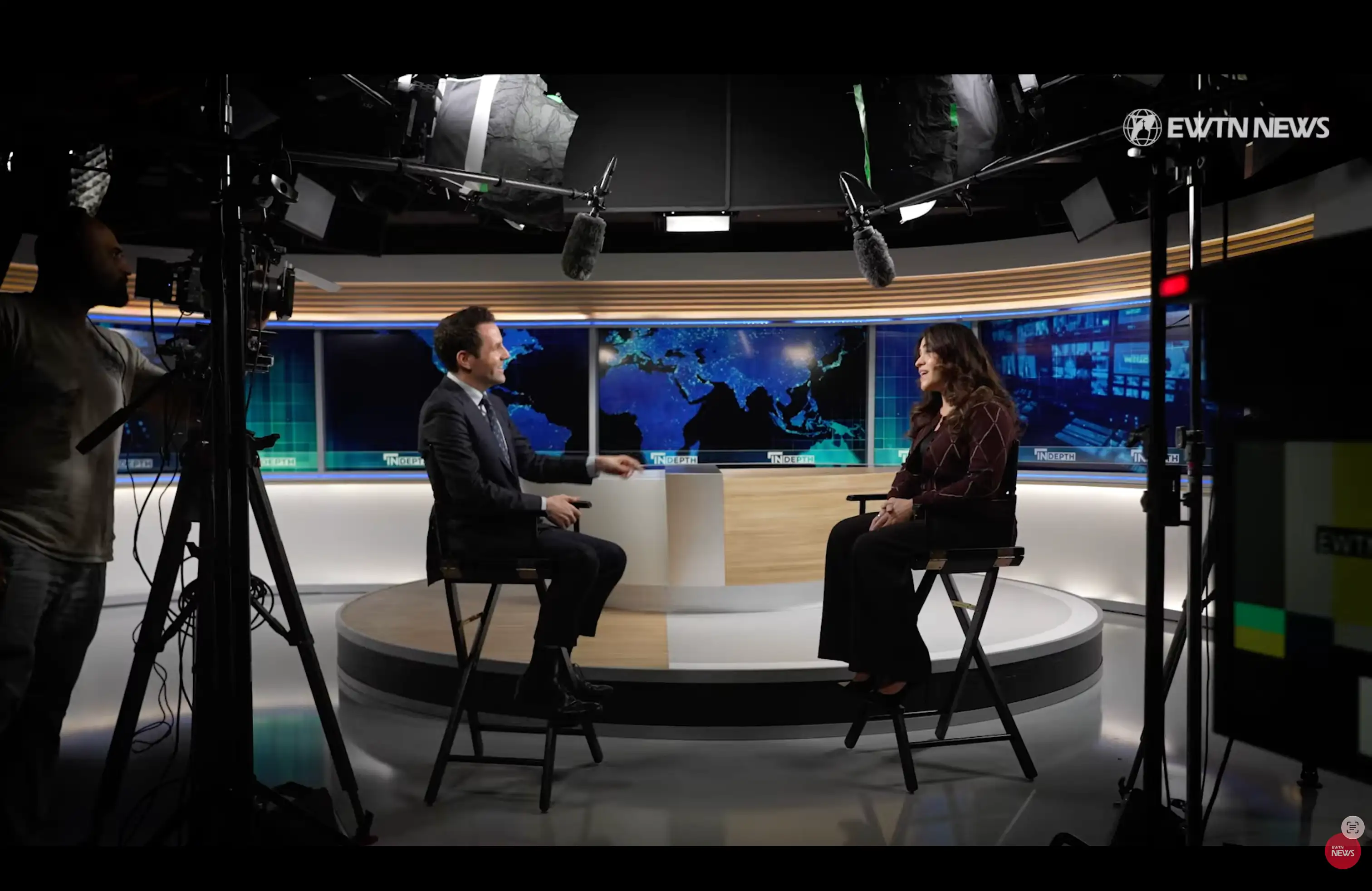
Her Vatican appointment was not a position she had pursued or applied for. When Pope Leo XIV approached her about taking on the responsibility, she had to pray and discern before accepting, considering the personal and professional changes involved in moving to Rome, learning a new language and leaving behind a career she had expected to continue.
Reflecting on the difference between personal plans and vocation, she said: “If you tell me, like, ‘Oh, is this what you want to do?’ No, but it’s what I’m called to do.” She added that wanting something and being called to it were “two very different things.”
Prayer remains central to how she understands her journey. Alvarado said she prays the Rosary for every person who has touched her life and helped shape her. She emphasised that she has not accomplished anything alone, recognising the contribution of those who have accompanied, supported and formed her along the way.
Her life presents leadership not simply as professional advancement but as a responsibility to be discerned and exercised in service of others.
Speaking openly about Annulment
In the same interview, Alvarado also spoke publicly about having received a declaration of nullity of her marriage from the Church. She said the subject had prompted many people to approach her with questions about annulments and about returning to fuller participation in the Church after divorce.
A declaration of nullity is not a Catholic divorce. It is a determination by a competent Church tribunal that a marriage was invalid from the beginning. Alvarado did not suggest that her personal circumstances were the reason for her appointment; rather, she reflected on the questions and conversations that followed her public disclosure.
Her willingness to discuss the matter provides an opportunity to address an issue that can be confusing or painful for Catholics. It also highlights the value of speaking about Church teaching with clarity and pastoral sensitivity, without treating her personal experience as a change in that teaching.
Encountering the human face of the Church
Alvarado has also reflected on the challenge of encountering the human imperfections of Church institutions. While some people worry that seeing these weaknesses may undermine faith, she said that recognising the Church’s human side can instead affirm faith in Christ and in the work God continues to do through imperfect people.
She expressed humility at the thought that God could use her, with her own limitations, in a responsibility of such significance.
Her approach to the role is also shaped by her understanding of Catholic identity. Speaking about criticism surrounding her appointment, she stressed that political affiliation should not determine how she serves the Church. Her priority, she indicated, is fidelity to Catholic teaching and the mission entrusted to her, rather than allegiance to a political camp.
A fast-moving professional learning to listen
Alvarado is known for her energetic approach to work and her desire to move projects forward. Yet she recognises that life and work in the Vatican may require a different rhythm.
In her interview, she referred to the Italian expression piano piano—slowly, patiently, step by step. She stressed the importance of taking time to understand people and circumstances rather than rushing towards action.
She connected this approach with synodality. Pope Leo XIV, she said, is a good listener who invites people into dialogue. Her responsibility is not to impose her own agenda but to understand the Pope’s vision and help carry it out.
“I am very much receiving one and executing it,” she said, describing her role in serving the Pope, the Church and the Roman Curia.
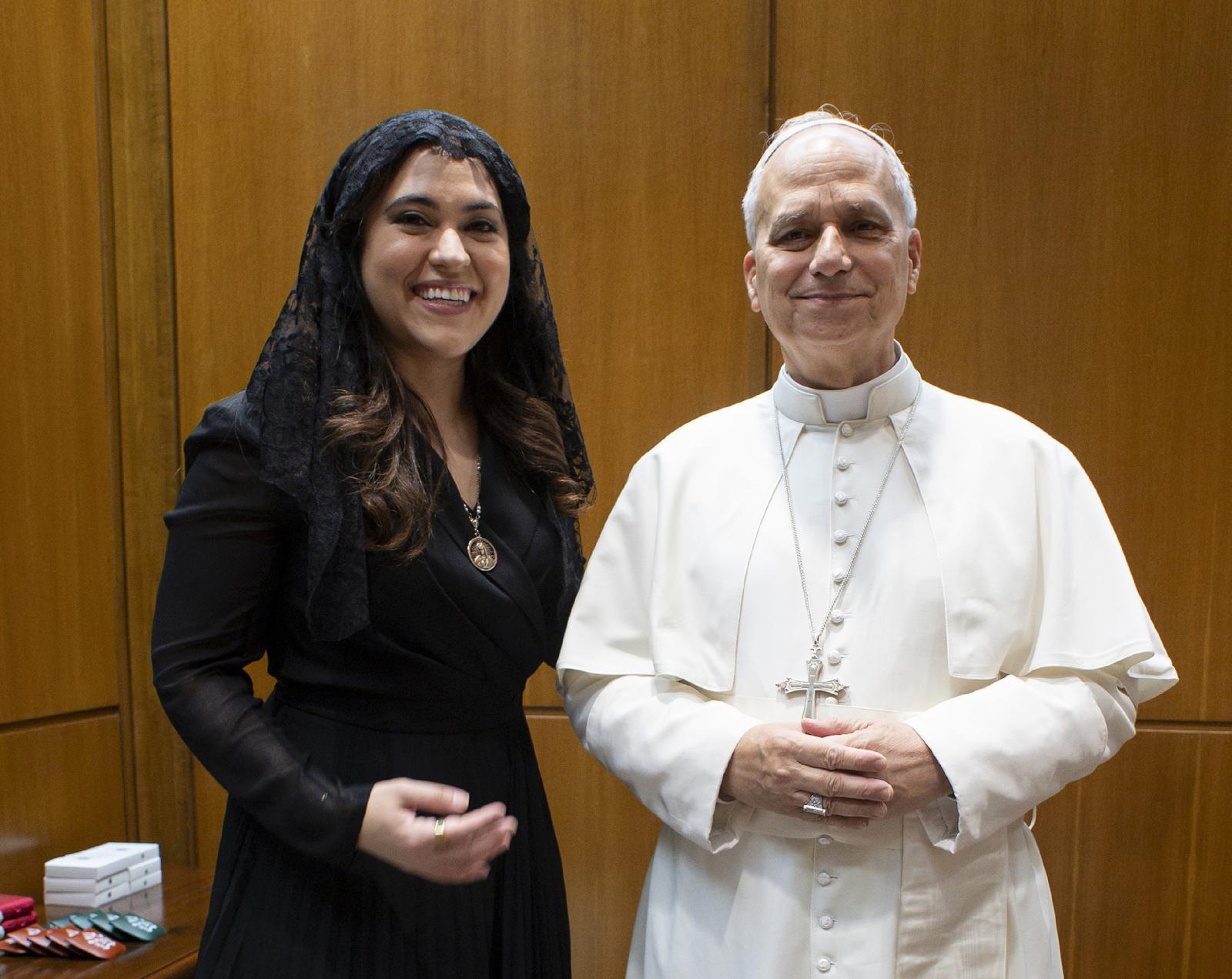
This emphasis on listening will be important in a global institution serving audiences across languages and cultures, where effective communication requires not only speed but also discernment, accuracy and collaboration.
Leading the Church’s Communications Mission
As prefect, Alvarado will oversee the Dicastery for Communication, which brings together several of the Holy See’s principal media and publishing institutions. These include Vatican News, Vatican Radio, L’Osservatore Romano, Vatican Media, the Holy See Press Office, the Vatican Publishing House, the Vatican Printing Press and the official website, Vatican.va, along with associated digital and technical services.
Pope Francis established the dicastery in 2015 to coordinate the Holy See’s communication bodies in a rapidly changing media environment.
Alvarado has indicated that listening and assessment will be priorities at the beginning of her tenure. She intends to understand the Church’s needs, recognise the talents within its communication teams and use audience data to help information and evangelisation reach people through the channels they use.
A Connection with India and Northeast India
Cardinal Filipe Neri Ferrão, Archbishop of Goa and Daman and president of the Federation of Asian Bishops’ Conferences, is among the members of the Dicastery for Communication, linking its mission with the diverse linguistic and cultural realities of the Asian Church.The dicastery’s work has particular relevance for Northeast India, where the Catholic Church serves communities across seven states, with rich linguistic, cultural and media traditions. Strengthening communication across dioceses and religious congregations is essential to sharing local Church experiences, supporting digital evangelisation and ensuring that the voices of the region reach wider national and international audiences.
The Northeast Social Communication Commission (NESCOM), the communication body of the Northeast India Regional Bishops’ Council, has been working to strengthen this network through regional collaboration and digital initiatives. It previously sought a message from outgoing prefect Paolo Ruffini for a communicators’ gathering and interviewed Dr. Natasha, director of theology of communication through the Catholic Bishops’ Conference of India. These engagements reflect NESCOM’s efforts to connect communication initiatives in the Northeast with the wider Church.
As Alvarado assumes office, her experience in global journalism and multilingual media offers scope for future exchange, professional formation and collaboration. For NESCOM and Catholic communicators across the region, stronger links with the dicastery could help amplify local stories, develop digital skills and bring the Church’s mission into closer dialogue with the people it serves.
The future of Catholic communication
Alvarado takes office amid a fragmented media landscape in which audiences access information across platforms, languages and cultures. The challenge is not simply to adopt new technologies, but to ensure that Church communication remains credible, accessible and rooted in its mission.Her experience in global news operations and emphasis on listening and collaboration will be important as she works to bring the Holy See’s communication institutions closer together and engage audiences worldwide.
For Northeast India, where effective communication must respond to linguistic and cultural diversity across a wide region, these priorities are especially relevant. The task for Catholic communicators is to connect local storytelling with digital innovation and pastoral responsibility, ensuring that the experiences of communities in the region contribute to the wider story of the Church.
Source: EWTN News interview and other publicly available sources.
Photo: Screenshot from EWTN News.