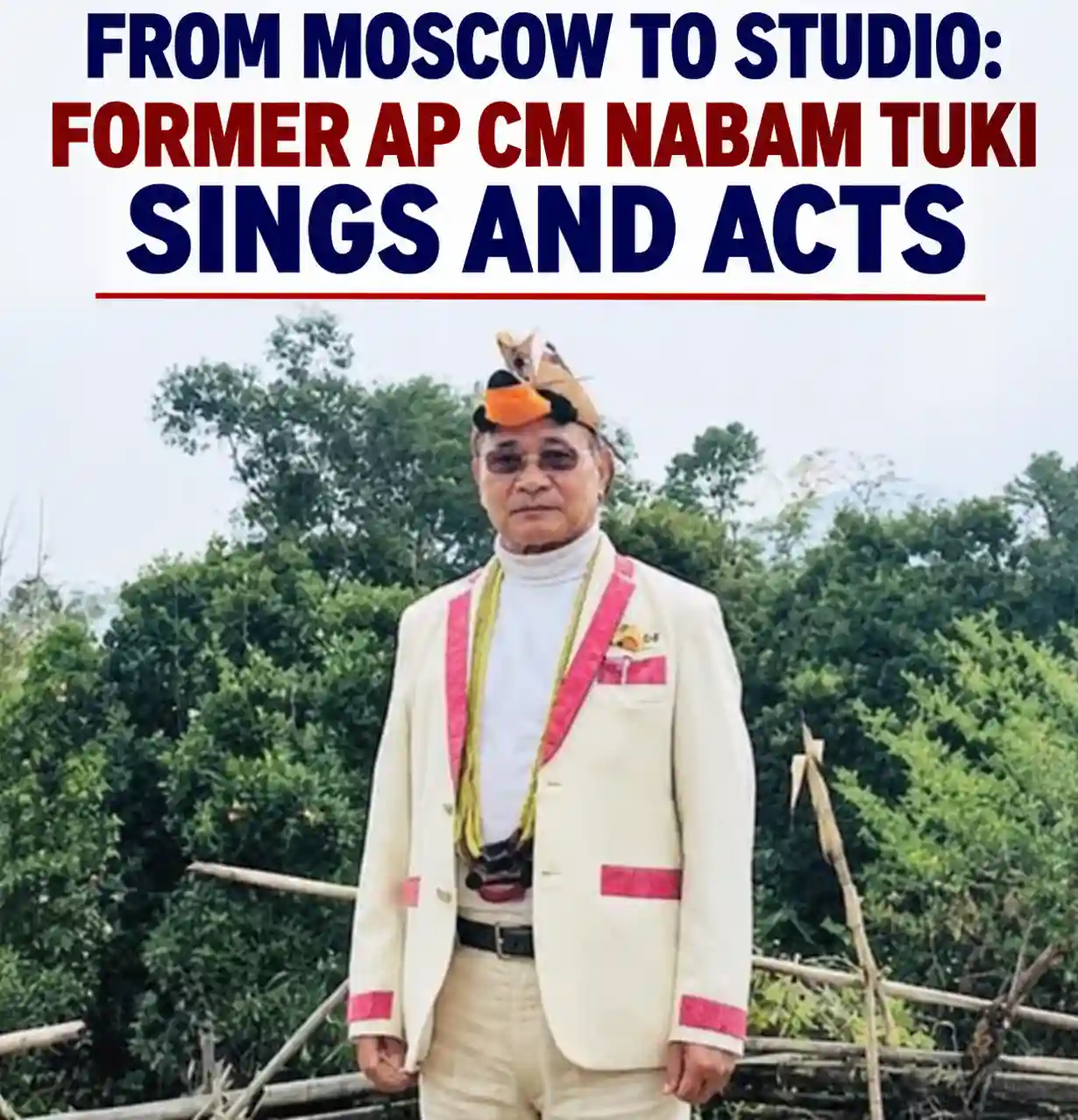
Guwahati, November 17, 2026: Former Arunachal Pradesh Chief Minister Nabam Tuki has ventured into music as a singer and actor in a newly released Nyishi music video, bringing together cultural identity, family values, environmental awareness and national integration.
The 62-year-old former Chief Minister, who hails from Sagalee in Papum Pare district, participated as lead singer and actor in video album. He served as Chief Minister from 2011 to 2016 and briefly returned to the office for three days in 2016.
Known for his political career, Tuki said his interest in music and cultural activities dates back to his school days. His association with singing also has an international connection. In July 1985, he participated in the World Youth Festival in Moscow, where he performed a Nyishi song before an international audience.
“People from other countries may not have understood the meaning of the Nyishi song, but they understood the music,” he recalled at the album launch.
Daughters as pillars of the family
The song's message about the importance of daughters struck an emotional chord with Tuki's family. His daughter said the concluding message, portraying daughters as pillars of their father's life, resonated deeply with her.
“We are five daughters in the family. We support him, and he supports us too,” she said.
Tuki has two sons and five daughters. Her remarks highlighted the mutual support within the family and added a personal dimension to the musical initiative.
From politics to music: An effort to inspire
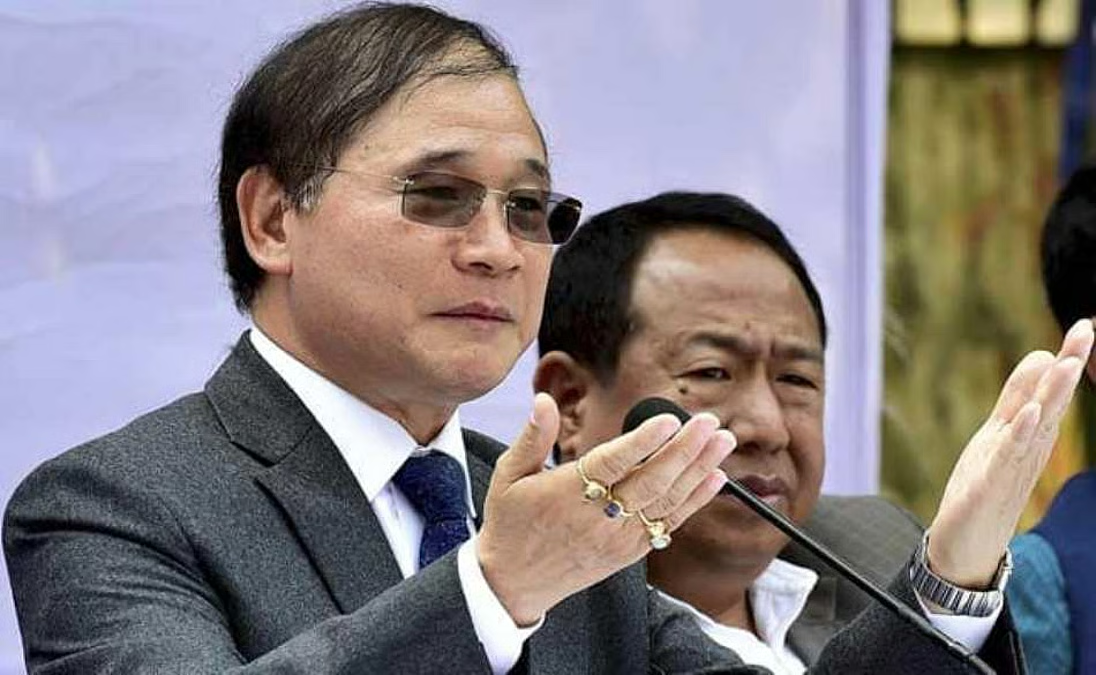
Tuki said that although he was never formally part of singing and dancing groups, he had always been interested in cultural activities.
“Since childhood, I have liked cultural activities. Whether in school, society or youth organisations, I was often the cultural secretary. Whenever an opportunity came, I tried to sing,” he said.
Explaining his experience in the recording studio, Tuki acknowledged that becoming a singer required repeated attempts and encouragement from his brothers.
“My brothers encouraged me to try. During my first attempt in the studio, I managed about 10 per cent. I kept trying, and with every attempt, I improved by another 10 per cent. After six attempts, I had made considerable progress, and following the final recording, the team selected the version for the album,” he recalled with a smile.
He described the experience as an opportunity to explore a different field and encourage younger people to pursue their interests beyond their professional responsibilities.
Inviting viewers to assess his performance, Tuki said, “If it is good, compliment me; if not, advise me.”
A friend's recollection of his artistic abilities
A longtime friend who had known Tuki since Class IX recalled his sporting and artistic interests, describing him as a versatile personality with abilities in football, volleyball, music and acting.
“He sang so melodiously and acted as well. Seeing him take the lead in this music video reminded me of Kamchilala, one of the pioneering music albums in Arunachal Pradesh, which brought the Nyishi community together through music,” the friend said.
He recalled that they often sang together for entertainment whenever they met at social gatherings. However, he said he had never expected Tuki to take on the role of lead singer and actor in a music video.
The friend expressed hope that the new group song would similarly encourage cultural solidarity and motivate younger generations to participate in artistic and cultural activities.
A song promoting unity and national integration
The newly produced group song conveys a message of togetherness, collective progress and national integration.
Its central lyrics, “Kujungulu hoto lamta kala… Kujungulu sangu lamta angla,” express the aspiration that people may shine like light and find their path forward in life.
Explaining the meaning, Tuki said the song encourages people to move together, shine together and work collectively towards their goals. He also expressed hope that it could be translated into other languages to reach a wider audience.
The music video complements the lyrics with visuals of the natural environment, traditional homes and the land, reflecting the cultural and geographical identity of the Nyishi community.
Preserving cultural heritage and natural resources
The album also brings attention to concerns about the growing commercialisation of traditional Nyishi marriage customs and the need to preserve cultural resources.
One of the speakers associated with the project observed that traditional ornaments and mithuns represent some of the highest forms of gifts exchanged between families during marriage ceremonies. These gifts carry cultural and social significance beyond their material value.
However, the increasing gifts of marriage exchanges has raised concerns about excessive expenditure and the depletion of resources. The speaker referred to instances where two to three hundred mithuns are involved in marriage exchanges, while even the cost of roasted meat has become increasingly expensive.
Traditional ornaments, too, are becoming vulnerable to depletion.
“Our ornaments are among the highest forms of gifts that Nyishis preserve and pass on. The mithun is also regarded as one of the most valuable gifts exchanged between the bride's and groom's families. A gift is sacred. We need to create awareness about how these gifts should be valued and used responsibly,” the speaker said.
The appeal was for communities to preserve the cultural and material significance of traditional gifts while discouraging excessive commercialisation of marriage practices.
Artists and collaborators behind the production
The album's maker described the production as a significant cultural initiative, particularly because a former Chief Minister had taken the initiative to sing and act in a Nyishi music project.
Senior artists, including Tati, a radio artist, and other collaborators contributed to the production. The sponsor of the audio album also acknowledged the friendships and personal connections that helped bring the project together.
Tuki thanked the senior artists and production team for their contributions, describing his participation as a valuable experience.
The project seeks to use music as a means of celebrating Nyishi identity, encouraging cultural preservation and communicating a message of unity to a wider audience.