

Guwahati, July 16, 2026:
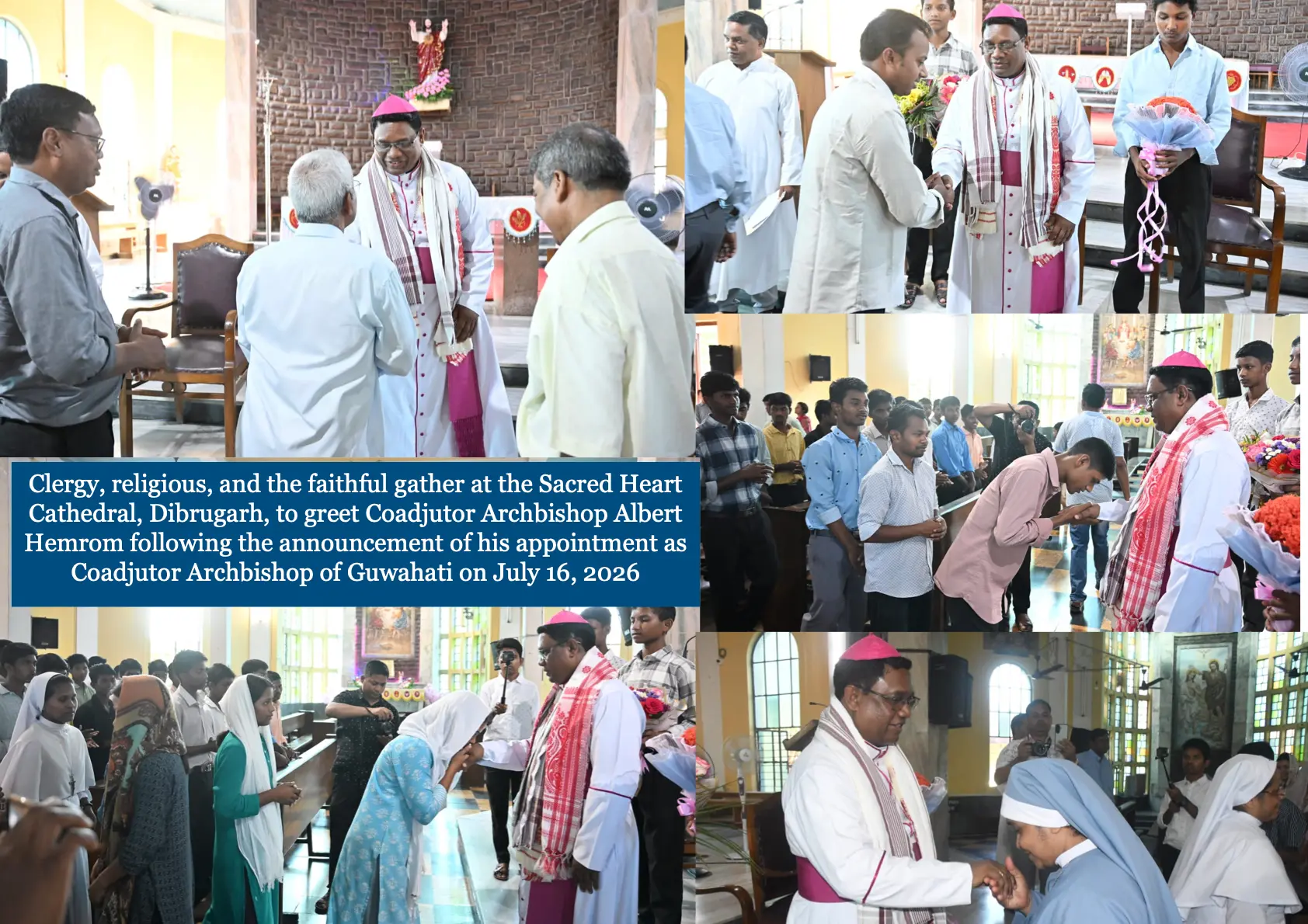
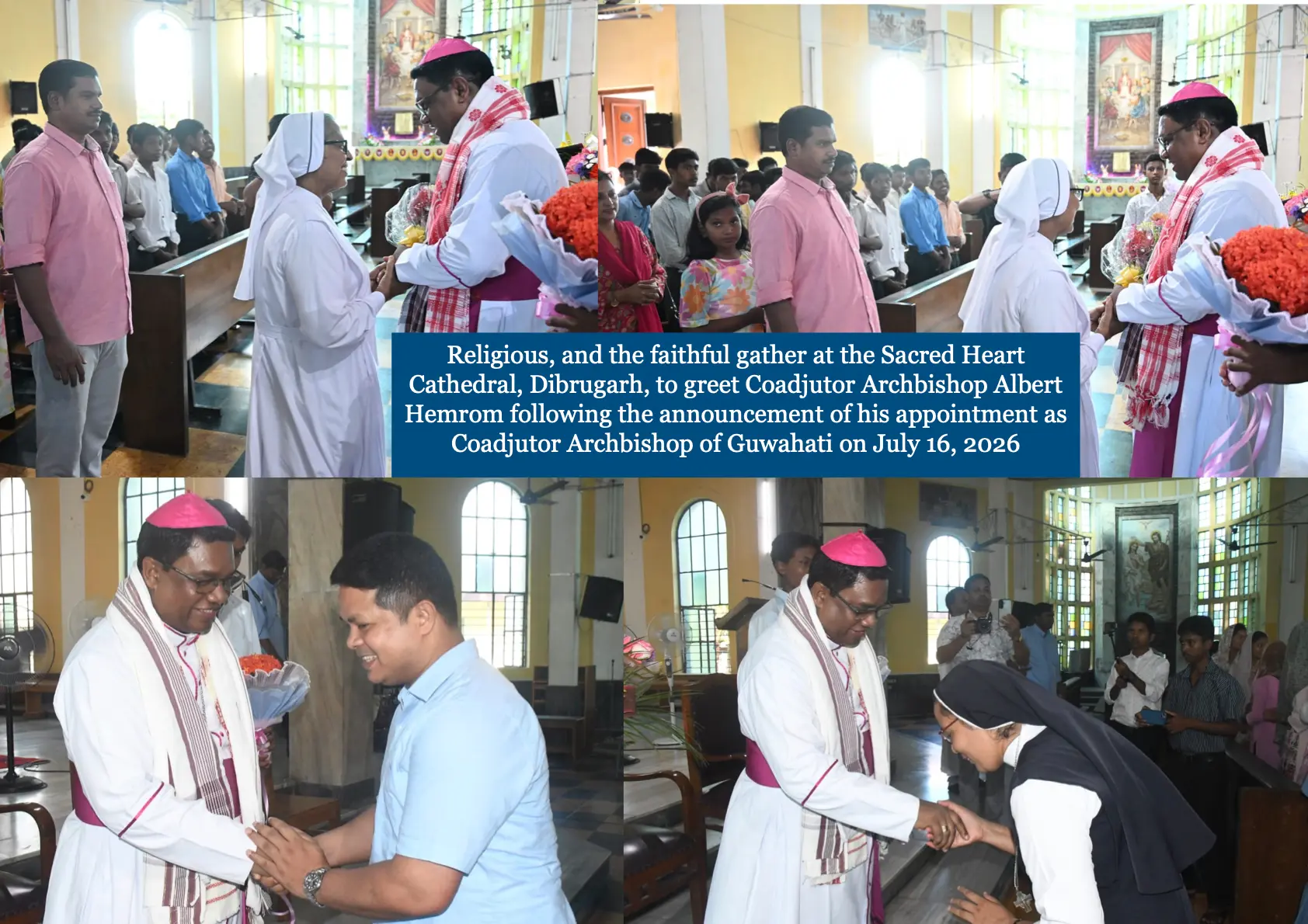
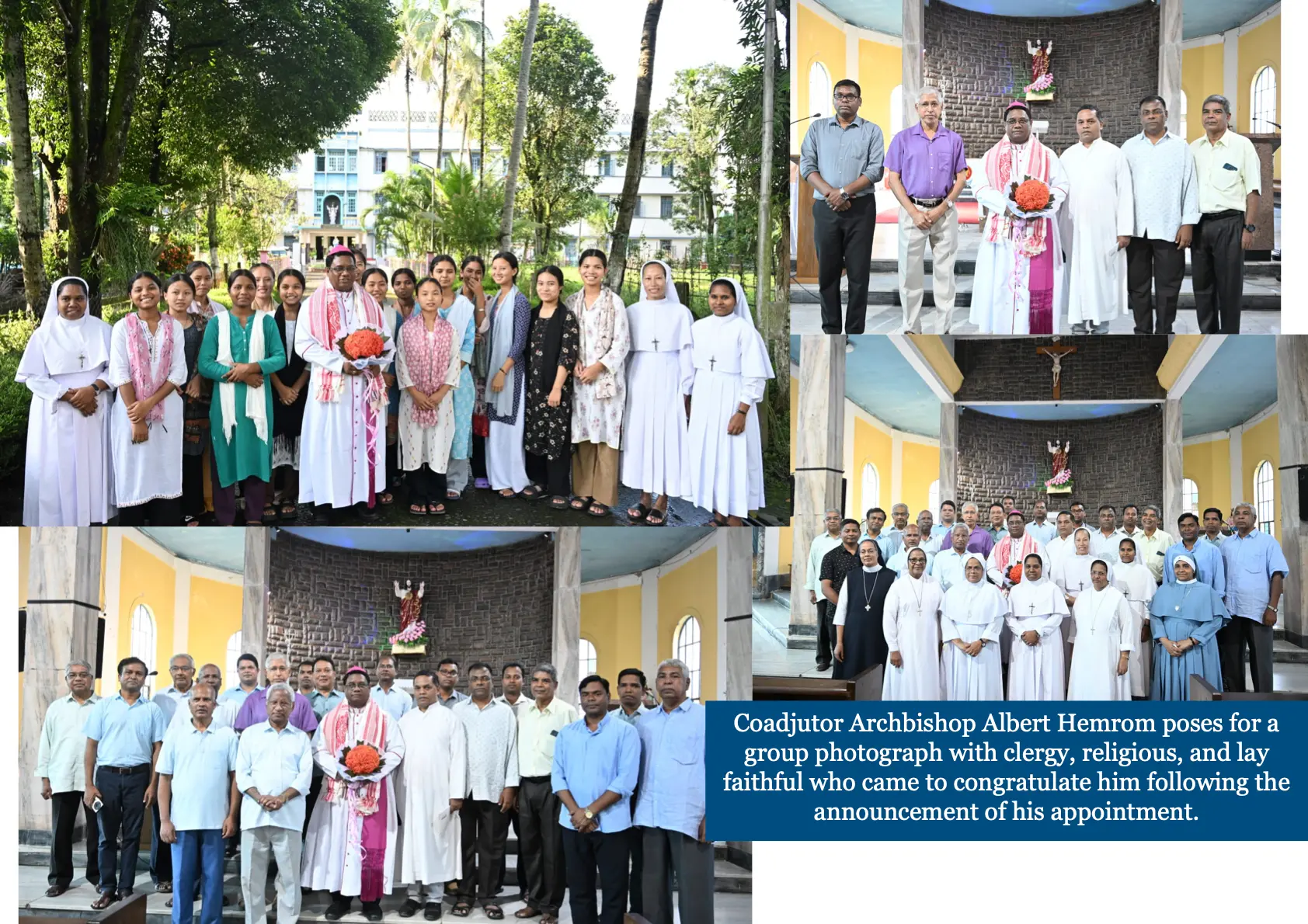
Pope Leo XIV has appointed Bishop Albert Hemrom, Bishop of Dibrugarh, as Coadjutor Archbishop of the Metropolitan Archdiocese of Guwahati, marking a historic milestone for the Catholic Church in Northeast India. The appointment was made public by the Holy See on Thursday, 16 July 2026.
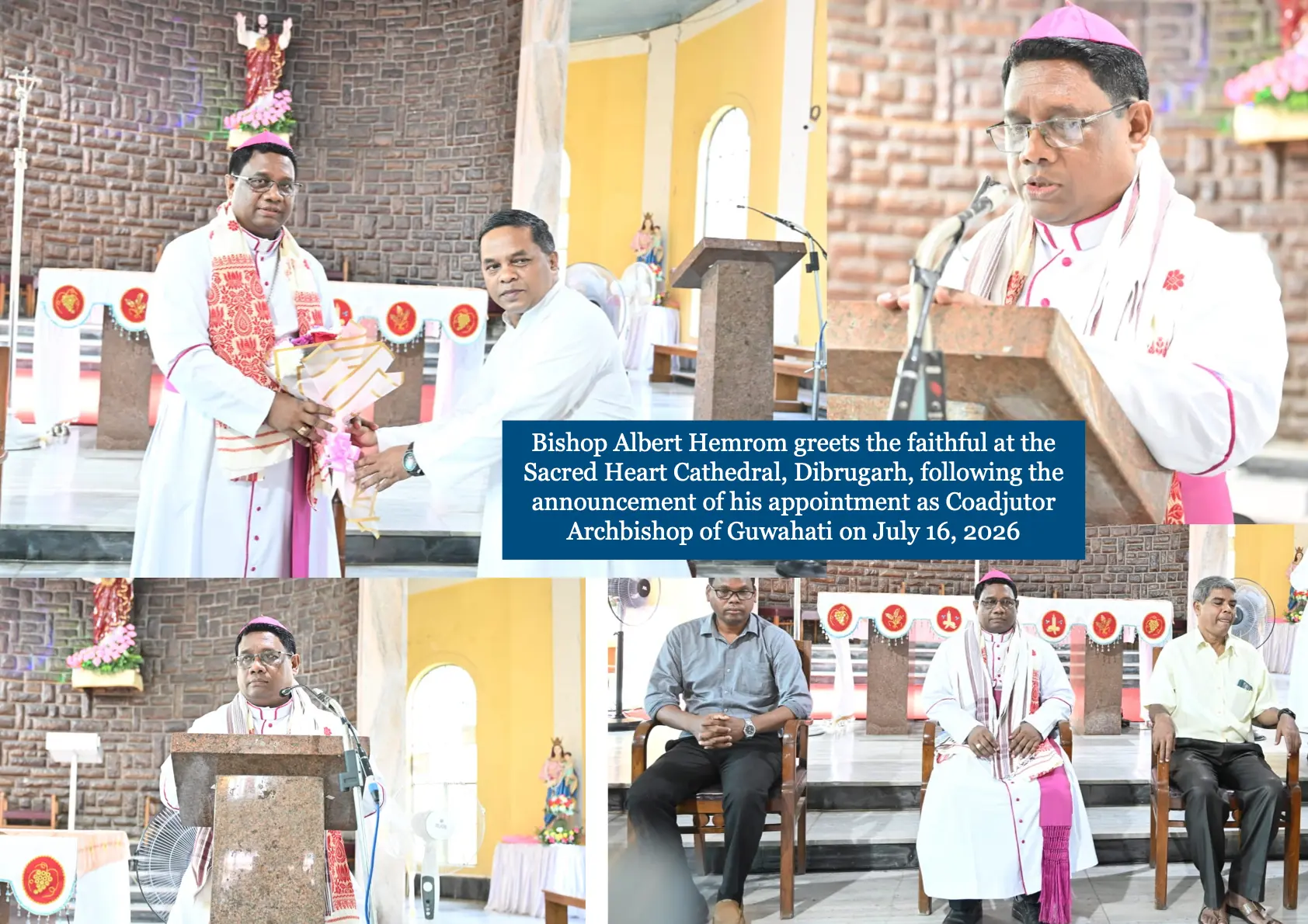
The appointment is of particular significance as Bishop Hemrom becomes the first indigenous Adivasi Archbishop-designate of the Metropolitan See of Guwahati. Upon succeeding Archbishop John Moolachira, he will become only the third Metropolitan Archbishop of Guwahati and the first son of the soil to lead the ecclesiastical province, reflecting the growing maturity of the local Church in Northeast India.
Born on 27 February 1969 in Konapathar in the Diocese of Dibrugarh, Bishop Hemrom began his priestly formation at St. Joseph’s Minor Seminary, Dibrugarh, before studying philosophy and theology at Christ the King College and Oriens Theological College, Shillong. He was ordained a priest for the Diocese of Dibrugarh on 25 April 1999.
He obtained a Licentiate in Canon Law from St. Peter’s Pontifical Institute, Bengaluru, in 2003 and later earned a Doctorate in Canon Law from the Pontifical Lateran University in Rome in 2014.
During his priestly ministry, he served as Assistant Parish Priest at St. Francis of Assisi Church, Rajabari (1999–2001); Prefect of Studies at St. Joseph’s Minor Seminary, Dibrugarh (2003–2006); Parish Priest of Rajabari while serving as Visiting Professor at Oriens Theological College, Shillong (2006–2011); and later Judicial Vicar of the Diocesan Tribunal, Rector of St. Joseph’s Minor Seminary, Member of the College of Consultors and Presbyteral Council, Secretary of the Diocesan Commission for Laity and Family, Vocation Promoter, and Visiting Professor of Canon Law at Oriens.
Pope Francis appointed him Coadjutor Bishop of Dibrugarh on 2 December 2018, and he received episcopal ordination on 24 February 2019. He subsequently succeeded Bishop Joseph Aind, SDB, as Bishop of Dibrugarh.
The Metropolitan Archdiocese of Guwahati traces its origins to 16 August 1992, when Pope St. John Paul II erected the Diocese of Guwahati with Bishop Thomas Menamparampil, SDB, as its first bishop. On 1 August 1995, it was elevated to a Metropolitan Archdiocese, becoming the ecclesiastical centre of Northeast India. Today, the province comprises the Archdiocese of Guwahati and the suffragan dioceses of Dibrugarh, Tezpur, Diphu, Bongaigaon, Itanagar and Miao.
Spread across 13,961 square kilometres, the Archdiocese serves more than 63,000 Catholics in 47 parishes. Its faithful come largely from indigenous communities, including the Garos, Rabhas, Bodos, Karbis, Tiwas, Santals and other Adivasi peoples.
The local Church is served by 67 diocesan priests, 155 religious priests and 516 women religious.
Before assuming leadership of the Metropolitan Archdiocese, Archbishop-designate Hemrom will take canonical possession of the office of Coadjutor Archbishop by presenting the Apostolic Letter of his appointment to the College of Consultors of the Archdiocese, in accordance with Canon 404 of the Code of Canon Law.
Archbishop John Moolachira, born on 14 December 1951, is required by Canon 401 §1 to submit his resignation to the Holy Father upon completing his seventy-fifth year. As Coadjutor Archbishop, Bishop Hemrom enjoys the right of succession (ius successionis). In accordance with Canon 409 §1, once the Holy Father accepts Archbishop Moolachira’s resignation, he will automatically succeed as Metropolitan Archbishop of Guwahati without the need for a further papal appointment. His succession will ordinarily be marked by a solemn liturgical celebration at the Christ the Bearer of Good News Cathedral, Guwahati, inaugurating his pastoral ministry as Metropolitan Archbishop.
The appointment also continues a notable historical link between the Diocese of Dibrugarh and the Metropolitan See of Guwahati. Dibrugarh has previously given the Northeast bishops who later became archbishops of Shillong and Guwahati. Bishop Albert Hemrom, however, will be the first indigenous priest of the Diocese of Dibrugarh to be entrusted with the pastoral leadership of the Metropolitan Archdiocese. Unlike his predecessors, who were missionaries from religious congregations, he represents a generation of local clergy formed within the Church they now lead.
Widely respected as a canon lawyer, educator and administrator, Archbishop-designate Hemrom currently serves as Chairman of the Northeast Social Communication Commission (NESCOM) and Chairman of the Regional Canon Law Commission of the Northeast India Regional Bishops’ Council. He is also recognised as a professor of Canon Law who has helped form generations of seminarians through his teaching ministry.
At 57 years of age, he is among the younger metropolitan archbishops-designate in India and could provide the Archdiocese of Guwahati with nearly two decades of pastoral leadership. His appointment has been welcomed across the seven states of Northeast India as a sign of the Church’s confidence in indigenous leadership and its continued commitment to nurturing vocations from the region.
For many clergy, religious and lay faithful, the appointment represents more than a personal honour. It marks another milestone in the journey of a local Church that was once built by missionaries and is now increasingly led by its own sons, offering a powerful witness to the growth, maturity and missionary vitality of the Catholic Church in Northeast India.