

GUWAHATI, September 18, 2026:
Rev. Dr Martin Sadiq, a priest of the Diocese of Jalandhar and a veteran Catholic media professional, has been appointed Director of the National Institute of Social Communications, Research and Training (NISCORT), the national institute of the Catholic Bishops’ Conference of India (CBCI) for social communication and media formation.
The appointment was announced at around 7 p.m. on September 17 by CBCI President Cardinal Anthony Poola during the CBCI Standing Committee meeting in Bengaluru.
Fr Sadiq’s formal installation as NISCORT Director is expected after October 15, 2026.
The CBCI also announced other appointments during the meeting. Rev. Dr Nysson Luka was appointed Director of the National Biblical, Catechetical and Liturgical Centre (NBCLC), while Fr Robinson Rodrigues was appointed Public Relations Officer (PRO) of the CBCI. The appointments form part of a wider strengthening of leadership across the CBCI’s national institutions and communication structures.
The appointment comes at an important moment for the CBCI’s communication mission. It is the first appointment to a national communication institution since Most Rev. Rayarala Vijaya Kumar PMI assumed the chairmanship of the CBCI Office for Social Communications & NISCORT, which is currently leading the Church’s national communication network. The CBCI Office for Social Communications works with regional and diocesan communication structures across the country.
NISCORT is one of the CBCI's National Centres and Institutes. Under the CBCI’s organisational structure, national centres and institutes function under a Bishop Chairman with a Director or Executive Director.
A significant moment for Punjab
For the Catholic Church in Punjab, Fr Sadiq’s appointment carries significance.
The Church in Punjab developed through a long history of missionary activity involving foreign and Indian missionary clergy. The Diocese of Jalandhar emerged from this missionary history and has over the decades been served by bishops from outside the region.
According to official diocesan figures, Punjab has around 1.5 lakh Catholics and 24 indigenous/local priests. The first indigenous priest from Punjab has since died.
Fr Sadiq’s appointment places a priest formed within the local Church of Punjab at the head of a national Catholic institution.
It represents the gradual emergence of locally rooted clergy into wider responsibilities within the Catholic Church in India — from a Church historically shaped by missionary leadership to one increasingly entrusting national responsibilities to its own indigenous clergy.
For NISCORT, the appointment brings to the national level a priest whose ministry has combined pastoral work, media, communication, education and formation.
A priest shaped by media and communication
Born on November 3, 1970, Fr Martin Sadiq was ordained a priest on April 15, 1998. He brings 28 years of priestly ministry and more than 24 years of experience in the Catholic media apostolate.
He served as Chief Executive Officer of Prarthana Bhawan Broadcasting Pvt. Ltd. from 2019 to May 2025, providing leadership to the Diocese of Jalandhar’s broadcasting apostolate.
From 2016 to 2026, he served as Director and Executive Secretary of Sat Sewa Sanchar, the diocesan Commission for Mass Media and Communication. Earlier, he served as Chief Editor of the diocesan weekly Sada Zamana from 2003 to 2006.
His ministry has extended beyond broadcasting to journalism, digital communication, media formation, filmmaking, photography and communication for evangelisation.
His academic formation is equally rooted in communication. He holds a Ph.D. in Social Sciences/Communication from the Pontifical University of St Thomas Aquinas — Angelicum, Rome in 2015.
He also holds a Licentiate in Institutional Social Communication from the Pontifical University of the Holy Cross, Rome in 2009, and a Master’s degree in Corporate Social Responsibility from LUMSA University, Rome in 2010.
His earlier qualifications include an M.A. in English Literature from Guru Nanak Dev University, Amritsar, a Bachelor of Education and a B.A. from Panjab University, Chandigarh.
His priestly ministry has also included five years of international and intercultural pastoral experience in Germany.
A national and international communication profile
Fr Sadiq has been active in SIGNIS, the international Catholic association for communication.
He has served as Vice President of the SIGNIS North India Region since 2022 and as Regional Media Secretary from 2023 to 2026.
In April 2026, he organised the SIGNIS India National Assembly in Jalandhar, bringing Catholic communicators and media professionals together to reflect on the future of Catholic communication.
His international contribution also included academic work connected with the SIGNIS World Congress in Africa in June 2026. A paper he prepared on protecting children and youth in the digital space was accepted for presentation at the congress.
However, Fr Sadiq was unable to travel to Africa because of constraints and therefore did not attend or personally present the paper.
Alongside his media ministry, he has considerable experience in priestly formation. He served as Vice-Rector and Professor at Holy Trinity Regional Major Seminary, Jalandhar, from 2016 to 2019, and earlier taught philosophy there. He also served as Vice-Rector of St John Vianney Minor Seminary, Amritsar.
Selected through a national process
Fr Sadiq was selected following a national-level interview process.
The panel included Cardinal Anthony Poola, President of the CBCI; Most Rev. Rayarala Vijaya Kumar, Chairman of the CBCI Office for Social Communications; Archbishop Anil Joseph Thomas Couto, Secretary General of the CBCI; Fr Biju Alapat, Secretary of the CBCI Office for Social Communications; and other members.
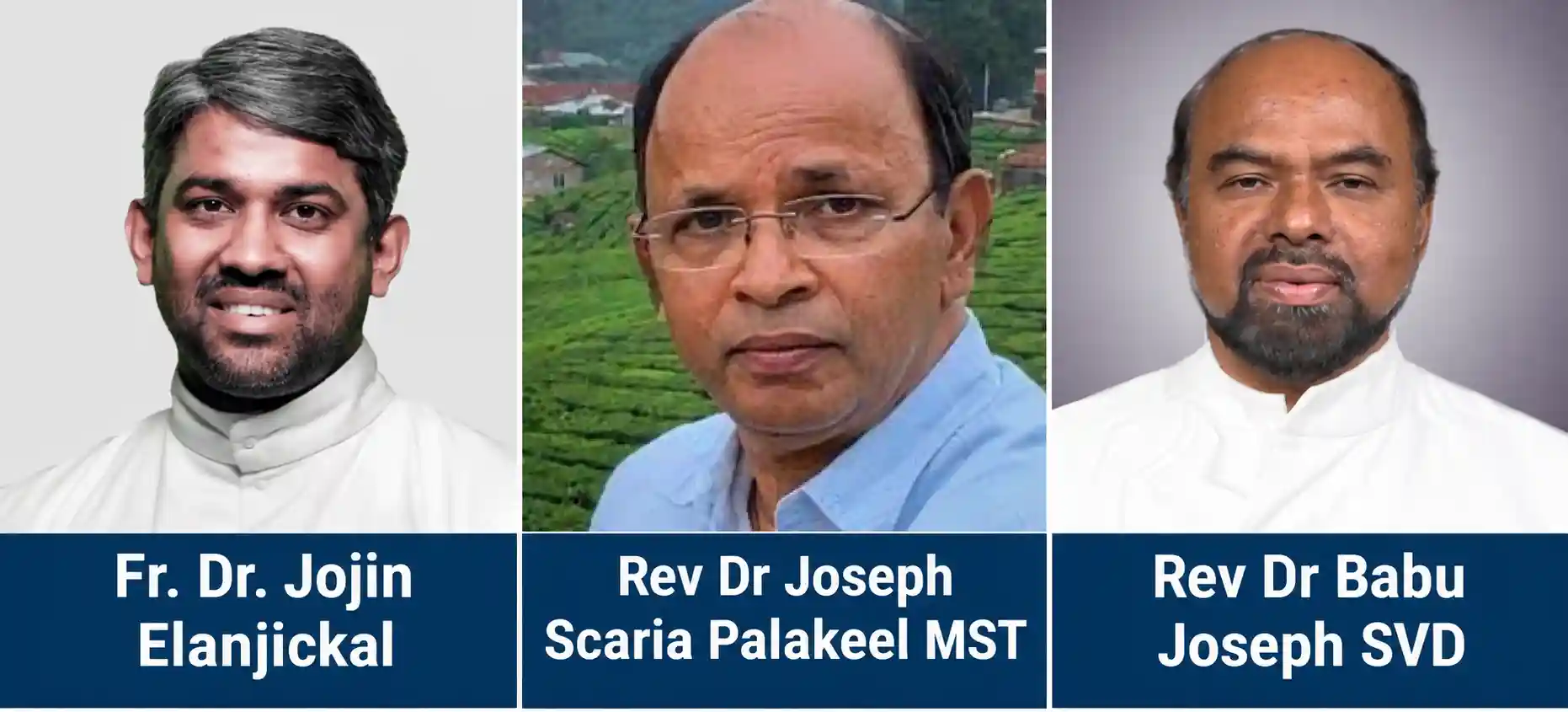
Other candidates interviewed included Rev Dr Jojin Elanjickal of the Archdiocese of Changanacherry, Rev Dr Joseph Scaria Palakeel MST and Rev Dr. Babu Joseph SVD.
Following the selection process, Cardinal Poola announced Fr Sadiq’s appointment on September 17.
His formal installation is expected after October 15.
A proposed new direction for NISCORT
Fr Sadiq to take over NISCORT with a proposed strategic vision for the institution’s next phase.
Before his appointment, he prepared a Strategic Vision Report for the Future Development of NISCORT Media College, followed by a proposed Three-Year Strategic Implementation Plan for 2027–2030.
The vision seeks to strengthen NISCORT as a centre for Media, Journalism, Public Relations, Digital Communication and Emerging Media, with greater emphasis on practical training, technology, professional formation and collaboration.
One of the central ideas is to move students beyond conventional classroom-based education towards a more practical “campus life”, where students are involved in real media production.
The proposed roadmap includes a Student Production House with activities in short films, documentaries, digital journalism, podcasting, live broadcasting, photography, creative design and digital content production.
It also proposes an AI and Media Innovation Lab, an NISCORT Creators Network, stronger industry partnerships, internships and professional masterclasses.
For priests, religious and diocesan communication personnel, the proposal envisages specialised programmes in public relations, crisis communication, media relations, digital evangelisation, social media, content production and media ethics.
An annual NISCORT National Media Fest, together with national and international academic and industry partnerships, also forms part of the proposed three-year roadmap.
The emphasis reflects some of the priorities already being articulated by the CBCI Office for Social Communications under Bishop Rayarala, particularly ethical digital communication, Artificial Intelligence and the protection of human dignity. In July, CBCI-OSC and NISCORT jointly organised an international symposium on human dignity in the age of AI.