MANILA, Philippines September 16, 202
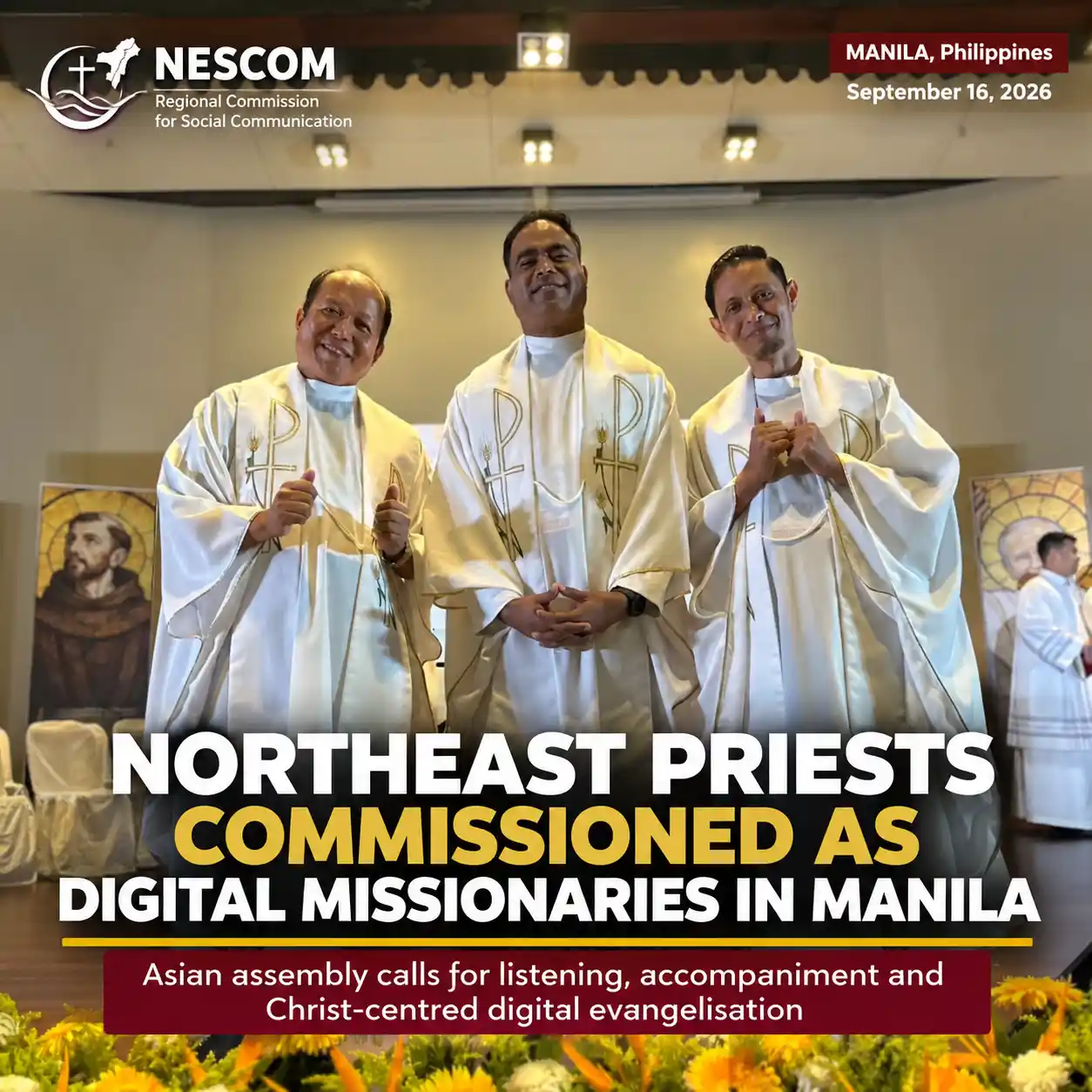
Three Catholic priests representing Northeast India were commissioned as digital missionaries during the concluding Holy Mass of the First Asian Catholic Digital Missionary Assembly (ACDMA) held in Manila on September 13.
Fr Jimberth K. Marak of the Diocese of Tura, Fr Ebormitre Henry Lamare of the Diocese of Jowai, and Fr Felix Anthony of the Diocese of Miao participated in the four-day assembly held from September 10 to 13 at the Radio Veritas Asia headquarters in Quezon City.
The participants were commissioned as witnesses to Christ during the Eucharistic celebration at the Cathedral-Shrine of the Good Shepherd in the Diocese of Novaliches, presided over by Cardinal Pablo Virgilio David, Vice President of the Federation of Asian Bishops’ Conferences (FABC).
In his homily, Cardinal David reminded the nearly 100 Catholic digital missionaries that the digital world is no longer simply a collection of technological tools but a culture where people encounter one another, search for meaning and seek God.
He urged digital missionaries not to enter this environment merely as content creators but as missionaries who listen before reacting and listen before judging, especially to the voices of the ignored, the poor, the wounded, the lonely and young people who have become distant from the Church.
The Cardinal described listening as an essential dimension of the Church's synodal journey in the digital world and called the participants to become listeners who understand, companions who walk with others, creators who build bridges and witnesses who reveal Christ.
The Assembly was organised by the FABC Office of Social Communications and Radio Veritas Asia, in partnership with the Dicastery for Communication, under the theme “Influencers to Witnesses: Synodal Way for Digital Mission in Asia.”
Northeast experience in Asian digital mission
The participation of the three priests brought different experiences of Catholic communication from Northeast India into the wider Asian conversation on digital evangelisation.
Fr Jimberth K. Marak, Social Communication Secretary of the Diocese of Tura and a Garo digital media influencer, has an active presence in video and social media ministry. His participation brought the experience of communicating faith and Church life among the Garo people to the Asian gathering.
For Fr Jimberth, one of the significant lessons from the Assembly's workshop was the importance of identifying and clearly defining the problem before attempting to communicate a solution.
“In any work, in any life, first make a choice. Once we make the choice of the problem or the topic, then we can deal with it systematically,” he reflected.
He also highlighted the value of coming together and engaging in dialogue.
“By coming together, sharing, or having a dialogue, we can come to find out the truth,” he said.
Fr Ebormitre Henry Lamare, a priest of the Diocese of Jowai, has been actively involved in strengthening the communication platforms of the diocese and increasing the visibility of its pastoral life.
During a group workshop at the Assembly, Fr Lamare experienced the importance of allowing participants from different countries and communities to share their realities.
“I learned so much from the group discussion because everyone in the group was given a chance to speak,” he said.
His group focused particularly on young people aged between 22 and 29, many of whom face uncertainty after completing their studies, including difficulties finding employment and discerning their future.
Fr Lamare said that digital content can become a means of offering hope and accompaniment to young people experiencing such pressures.
The discussion also explored how digital missionaries can help young people participate in World Youth Day 2027 in Seoul, South Korea, even when they are unable to travel there physically.
The challenge, he noted, is to develop digital content that allows young people to participate in the experience from their own countries, dioceses, parishes and communities.
From content creation to witness
The Assembly repeatedly returned to the question of what it means to be a Catholic communicator in a rapidly changing digital culture.
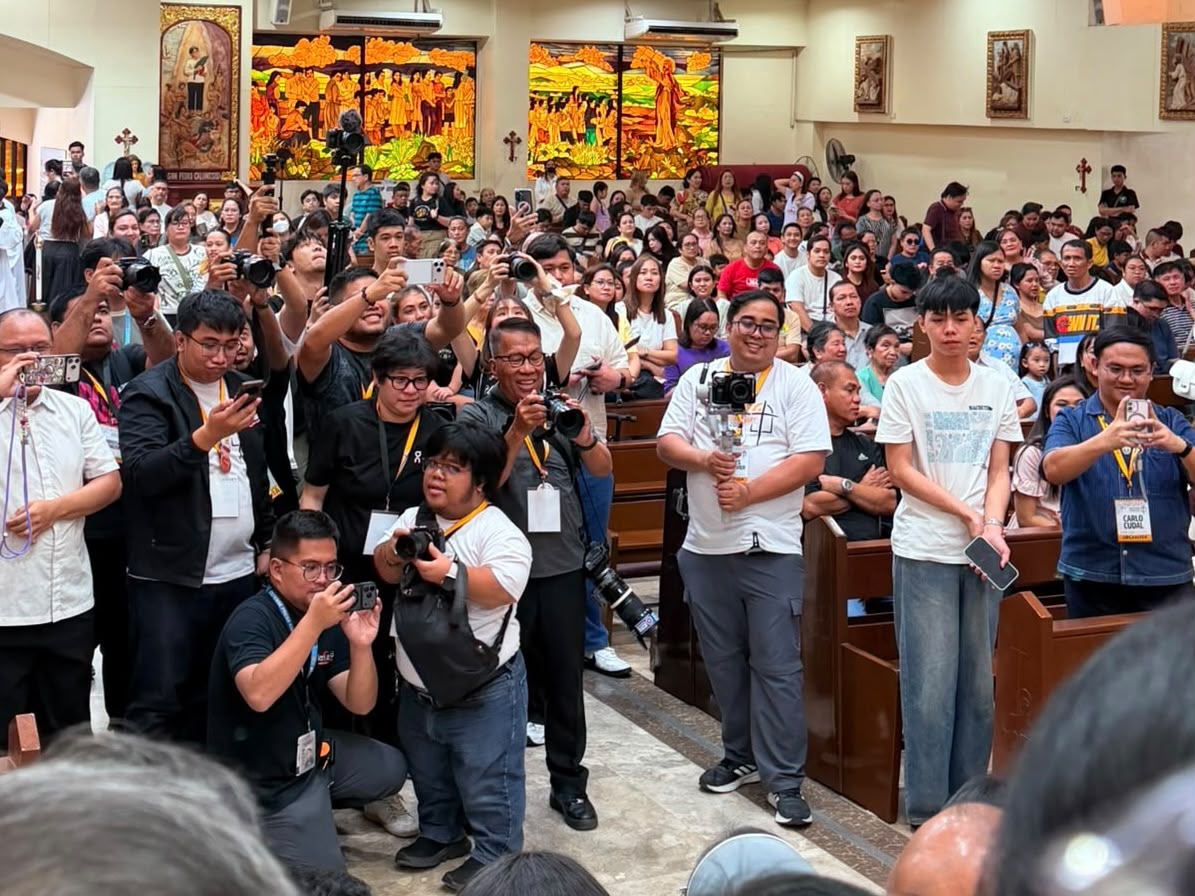
The participants reflected on the danger of allowing engagement, likes, views and personal recognition to overshadow the missionary purpose of communication.
The central emphasis was a movement from influence to witness—from simply producing content to listening to people, accompanying them and creating opportunities for encounter with Christ.
In his concluding remarks, Bishop Marcelino Antonio Maralit Jr., Chairman of the FABC Office of Social Communications, expressed hope that the deliberations, presentations and discussions would help participants grow as authentic witnesses of Jesus Christ through their digital content.
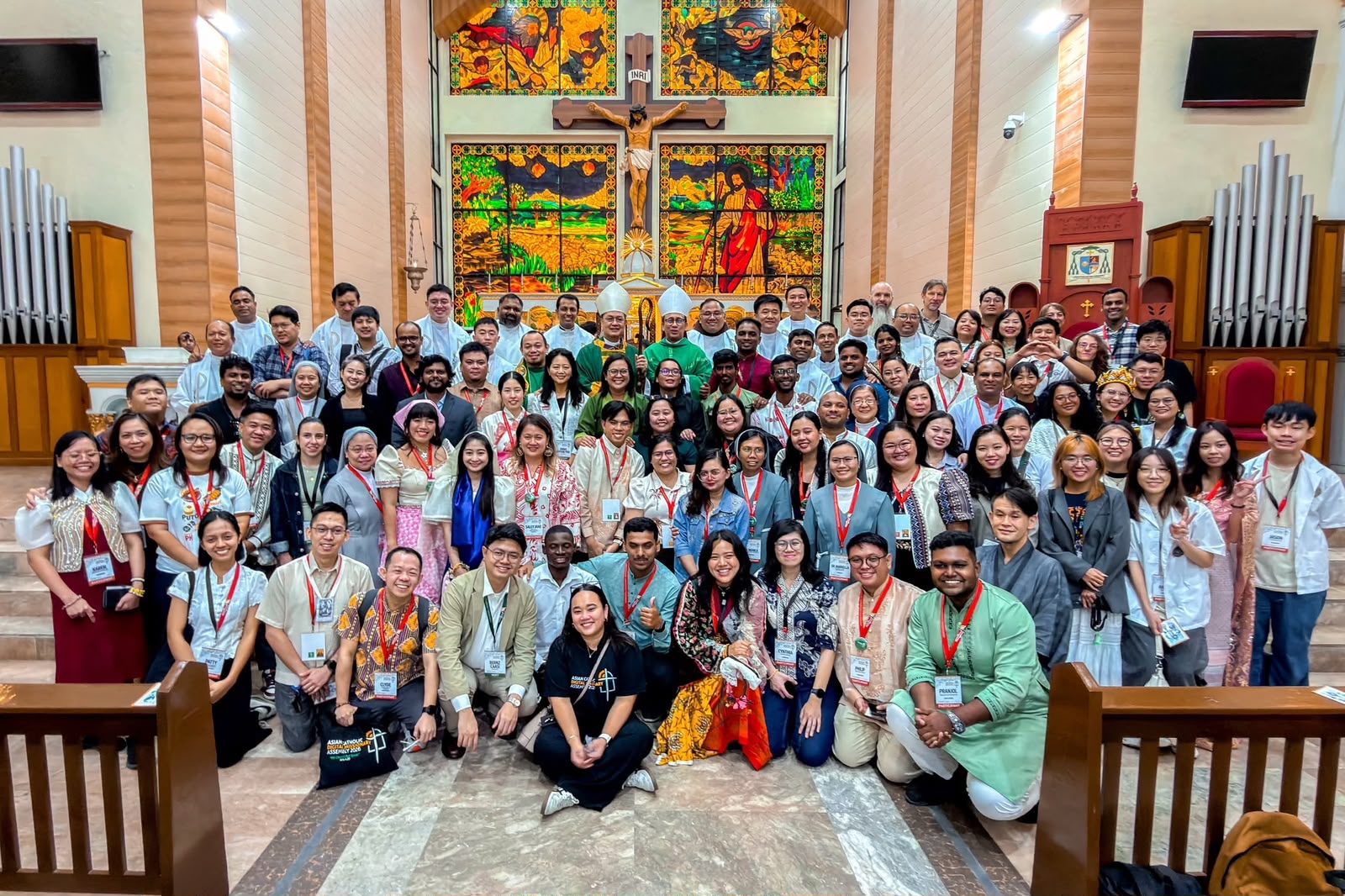
The Assembly concluded with participants from across Asia committing themselves to continued collaboration as Catholic digital missionaries.
They adopted a four-point resolution calling for quarterly meetings and prayer gatherings; online media formation programmes; locally adapted Fully Present Network initiatives; and Digital Missionary Assemblies at diocesan, regional and national levels.
The Assembly also looked ahead to World Youth Day 2027 in Seoul, exploring ways of developing “Asian Voices for WYD” to connect young Catholics across the continent.
For the Northeast, the participation of Fr Jimberth, Fr Ebormitre and Fr Felix provides an opportunity to bring the region's diverse communication experiences into the emerging Asian network of digital missionaries.
Their experience also points to a growing understanding of digital evangelisation as more than visibility or content production. It is a ministry that requires listening to people's realities, accompanying them in their struggles, communicating with responsibility and ultimately pointing towards Christ.
The Assembly's message therefore extends beyond Manila: digital mission begins not with the content a communicator wants to produce, but with the people he or she is called to serve.
Reported by Fr Felix Anthony, Secretary for Social Communication, Diocese of Miao