
GUWAHATI, Assam — September 17, 2026
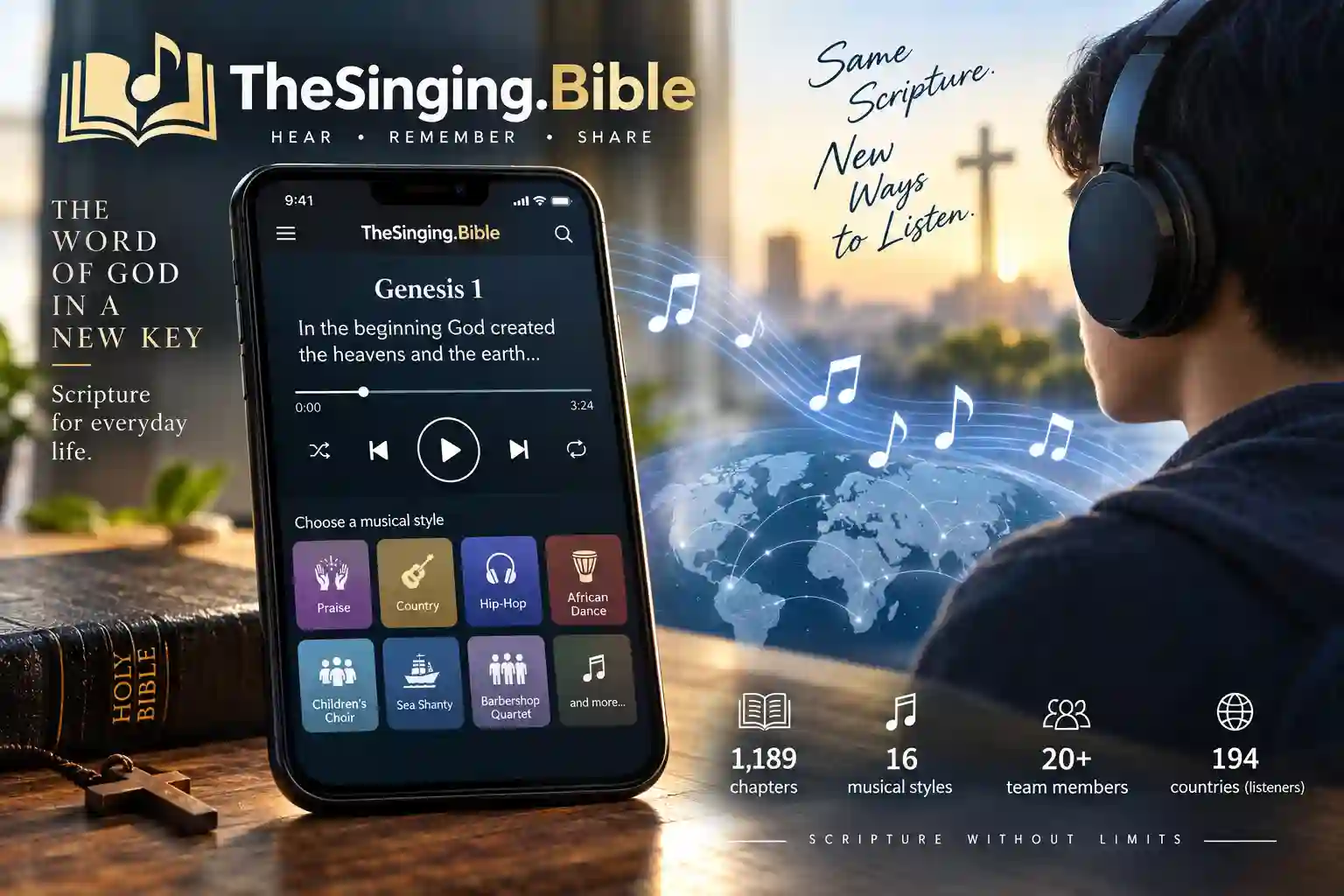
A new digital Bible project is using music and artificial intelligence to offer Scripture in a different format, making 1,189 chapters from a 66-book biblical edition available through musical recordings in multiple styles.
Called TheSinging.Bible, the project was launched in August 2026 by Ron Forseth, its Founder and Executive Producer. The platform allows users to select a biblical book and chapter, choose a musical style and voice, and listen to the Scripture online.
The project presents its recordings through the Singing Bible Edition (SBE), based on the Berean Standard Bible. The Berean Standard Bible contains 66 books and 1,189 chapters.
Scripture through music
The platform offers the biblical text through a range of musical styles and voices, seeking to make Scripture accessible to people who may encounter it more readily through listening than conventional reading.
The concept reflects the growing use of digital media to help people encounter Scripture in everyday settings—while travelling, walking, exercising or simply listening at home.
The project combines human production and AI-assisted technology to produce its large collection of recordings.
The Catholic Canon and the Digital Bible
While the project describes its collection as covering the Bible's 1,189 chapters, it does not currently represent the complete Catholic biblical canon.
The 1,189-chapter collection corresponds to the 66-book canon used by the Berean Standard Bible. The Catholic canon contains 73 books, including the seven deuterocanonical books of the Old Testament—Tobit, Judith, Wisdom, Sirach, Baruch, and 1 and 2 Maccabees—as well as the Catholic additions to Esther and Daniel.
Therefore, TheSinging.Bible should not be described as a complete Catholic Bible in musical form. For Catholic readers, it is more accurately understood as a Christian digital Scripture project based on a 66-book biblical edition.
This distinction is particularly important when considering digital Bible resources for Catholic catechesis, liturgy or parish formation.
A new possibility for digital evangelisation
Despite the canonical distinction, the project illustrates an emerging possibility in digital evangelisation: using music, audio, artificial intelligence and digital platforms to encourage engagement with Scripture.
For Catholic communicators, it raises an interesting pastoral question: how might similar technologies be used with Catholic-approved biblical translations and the complete Catholic canon to help people encounter the Word of God?
As digital evangelisation develops, projects such as TheSinging.Bible demonstrate how technology can create new pathways for hearing and engaging with Scripture—while also reminding Catholic communicators of the importance of canonical, theological and pastoral accuracy when recommending digital resources.
Explore the project: TheSinging.Bible
Source: TheSinging.Bible; Berean Standard Bible.